

Are you struggling to maintain perfect water conditions in your aquarium? You’re not alone. Understanding water chemistry is like learning a new language – it might seem overwhelming at first, but once you grasp the basics, everything starts making sense. In this comprehensive guide, we’ll break down everything you need to know about aquarium water chemistry in simple, easy-to-understand terms.
Why Water Chemistry Matters
Think of your aquarium’s water chemistry as the foundation of your underwater ecosystem. Just like humans need clean air with the right oxygen levels to survive, fish require water with specific chemical properties to thrive. Poor water chemistry isn’t just about dirty water – it’s about creating an environment where your fish can flourish rather than merely survive.
Impact on Fish Health
Proper water chemistry directly affects your fish’s:
- Breathing Ability
- Helps fish extract oxygen efficiently from water
- Prevents gill damage from harmful chemicals
- Maintains proper oxygen dissolution rates
- Immune System
- Strengthens natural disease resistance
- Reduces stress-related health issues
- Prevents bacterial and fungal infections
- Growth and Development
- Supports proper scale and fin development
- Enables natural coloration
- Promotes healthy appetite and digestion
Common Problems Caused by Poor Water Chemistry
- Immediate Health Issues:
- Stressed or sick fish showing erratic swimming patterns
- Unexplained fish deaths
- Fish gasping at the surface
- Loss of appetite
- Fin rot and other bacterial infections
- Scale damage and discoloration
- Environmental Problems:
- Persistent algae outbreaks
- Cloudy or discolored water
- Foul odors
- Poor plant growth
- Bacterial blooms
- Mineral buildup on equipment
- Long-term Consequences:
- Shortened fish lifespan
- Reduced breeding success
- Stunted growth
- Chronic stress
- Recurring disease outbreaks
- Filter system inefficiency
The Biological Balance
Water chemistry maintains crucial biological processes:
- The Nitrogen Cycle
- Converts toxic ammonia into safer compounds
- Supports beneficial bacteria growth
- Maintains natural waste processing
- Plant Health
- Enables proper nutrient uptake
- Supports photosynthesis
- Prevents nutrient deficiencies
- Beneficial Bacteria
- Promotes healthy bacterial colonies
- Maintains biological filtration
- Creates a stable ecosystem
Economic Impact
Poor water chemistry can affect your wallet through:
- Equipment Damage
- Premature filter failure
- Heater malfunction
- Pump deterioration
- Decorative item degradation
- Increased Maintenance Costs
- More frequent water changes
- Additional chemical treatments
- Replacement fish costs
- Medical treatments for sick fish
Prevention Is Better Than Cure
Understanding water chemistry helps you:
- Anticipate Problems
- Recognize early warning signs
- Prevent catastrophic crashes
- Maintain stable conditions
- Reduce medication needs
- Extend equipment life
- Lower fish replacement costs
- Minimize emergency interventions
- Enjoy the Hobby More
- Spend less time troubleshooting
- Have healthier, more active fish
- Experience fewer frustrations
- Achieve better breeding success
The Ripple Effect
Good water chemistry influences:
- Visual Appeal
- Clearer water
- Brighter fish colors
- Healthier plant growth
- Less algae buildup
- More predictable routines
- Fewer emergency interventions
- Better long-term stability
- Easier problem diagnosis
- Overall Success
- Higher fish survival rates
- Better breeding results
- More enjoyable hobby experience
- Longer-lasting aquarium setup
Understanding and maintaining proper water chemistry isn’t just about following rules – it’s about creating a thriving underwater world where your fish can live their best lives. By mastering these fundamentals, you’re not just keeping fish; you’re creating a sustainable ecosystem that will reward you with years of enjoyment and success in the hobby.
Essential Water Parameters You Must Monitor
Understanding and monitoring water parameters is crucial for maintaining a healthy aquarium ecosystem. Let’s dive deep into each essential parameter and understand why they matter, how to test them, and what to do when things go wrong.
1. pH Levels: The Foundation of Water Chemistry
pH is more than just a number – it’s the cornerstone of your aquarium’s health. This parameter measures how acidic or alkaline your water is on a scale from 0 to 14.
Optimal Ranges:
- Freshwater Community Tanks: 6.5-7.5
- African Cichlids: 7.8-8.5
- Discus and Tetras: 6.0-6.8
- Marine Aquariums: 8.0-8.4
- Planted Tanks: 6.3-7.2
Testing Guidelines:
- Test twice weekly in new tanks
- Weekly in established aquariums
- After adding new decorations
- Following water changes
- When fish show unusual behavior
Warning Signs of pH Problems:
- Fish gasping at surface
- Unusual swimming patterns
- Loss of appetite
- Faded colors
- Increased hiding behavior
2. Ammonia: The Silent Killer
Ammonia is arguably the most dangerous parameter in your aquarium. Even small amounts can be lethal to your fish.
Sources of Ammonia:
- Fish waste
- Decomposing food
- Dead plant matter
- Overstocking
- Overfeeding
- Poor filtration
Critical Levels:
- Target Level: 0 ppm (parts per million)
- Danger Level: Above 0.25 ppm
- Lethal Level: Above 2.0 ppm
Emergency Response Plan:
- Immediate 50% water change
- Add ammonia neutralizer
- Check filter function
- Reduce feeding
- Test daily until resolved
3. Nitrites and Nitrates: The Nitrogen Cycle Components
Understanding these parameters is essential for maintaining a stable aquarium.
Nitrites (NO₂):
- Target Level: 0 ppm
- Testing Frequency: Weekly
- Danger Signs:
- Brown gills
- Rapid breathing
- Lethargy
- Loss of appetite
Emergency Actions for High Nitrites:
- 30-50% water change
- Add bacterial supplements
- Check filter media
- Reduce bioload
Nitrates (NO₃):
- Optimal Range: Below 20 ppm
- Maximum Safe Level: 40 ppm
- Testing Frequency: Bi-weekly
Natural Nitrate Control Methods:
- Live plants
- Regular water changes
- Proper feeding
- Adequate filtration
- Substrate cleaning
4. Water Hardness (GH & KH)
General Hardness (GH):
- Measures dissolved minerals
- Optimal Range: 4-8 dGH
- Species-Specific Needs:
- Soft Water Fish: 3-6 dGH
- Hard Water Fish: 8-12 dGH
- Plants: 3-8 dGH
Carbonate Hardness (KH):
- Acts as pH buffer
- Optimal Range: 3-8 dKH
- Testing Frequency: Monthly
- Importance:
- Prevents pH crashes
- Stabilizes water chemistry
- Supports plant growth
5. Temperature
Often overlooked but crucial parameter:
- Tropical Community: 75-80°F (24-27°C)
- Cold Water Species: 65-75°F (18-24°C)
- Reef Tanks: 75-78°F (24-26°C)
Temperature Stability:
- Maximum daily fluctuation: 2°F
- Use quality heaters
- Install backup thermometers
- Monitor seasonal changes
6. Total Dissolved Solids (TDS)
Understanding TDS:
- Measures dissolved matter
- Optimal Range: 100-200 ppm
- Testing Frequency: Monthly
Impact on Fish:
- Affects osmoregulation
- Influences breeding
- Affects medication efficiency
- Indicates water quality
7. Oxygen Levels
Maintaining Proper Oxygen:
- Optimal Range: 6-8 ppm
- Critical Level: Below 3 ppm
- Testing Methods:
- Digital meters
- Drop tests
- Visual observation
Improving Oxygen Levels:
- Surface agitation
- Air stones
- Power heads
- Live plants
- Proper temperature control
Monitoring Schedule:
Daily:
- Temperature
- Visual checks
- Equipment function
Weekly:
- pH
- Ammonia
- Nitrites
- Nitrates
Monthly:
- GH/KH
- TDS
- Deep parameter analysis
- Master test kit
- pH buffer
- Ammonia neutralizer
- Water conditioner
- Bacterial supplement
This comprehensive understanding of water parameters will help you maintain a healthy, thriving aquarium ecosystem. Remember, stability is often more important than perfect readings, and sudden changes can be more harmful than slightly off-target values.
Essential Testing Equipment
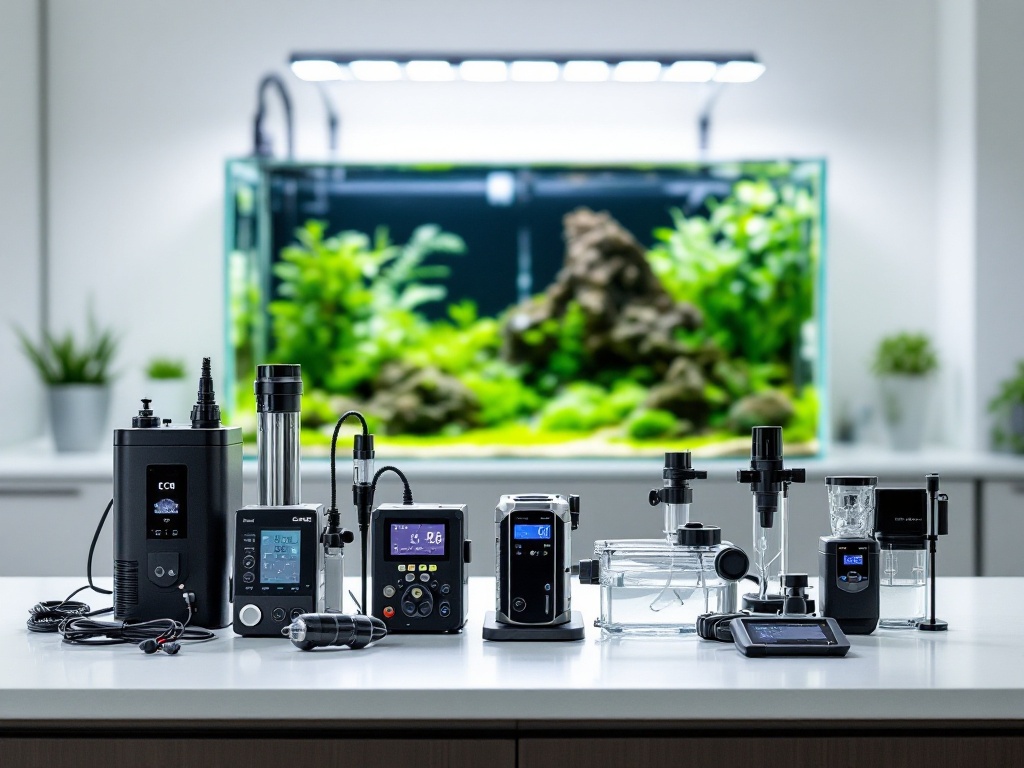
Invest in quality testing tools:
- Master Test Kit ($30-40)
- More accurate than strips
- Tests multiple parameters
- Cost-effective long-term
- Digital pH Meter ($20-30)
- Quick readings
- Easy to use
- Requires calibration
- TDS Meter ($15-25)
- Measures total dissolved solids
- Helpful for water change decisions
Maintaining Perfect Water Chemistry
Weekly Maintenance Schedule
Monday:
- Test all parameters
- Record results
- Plan necessary adjustments
Wednesday:
- Partial water change (10-25%)
- Clean filter media
- Remove debris
Saturday:
- Quick pH test
- Top off evaporated water
- Check temperature
Common Problems and Solutions
High Ammonia Levels
Immediate Actions:
- Perform 50% water change
- Add beneficial bacteria
- Check filter function
- Remove uneaten food
Prevention:
- Don’t overstock
- Feed appropriately
- Regular maintenance
- Proper filtration
Unstable pH
Solutions:
- Test KH levels
- Add pH buffer if needed
- Use crushed coral in filter
- Regular water changes
High Nitrates
Fix It:
- Increase water change frequency
- Add live plants
- Reduce feeding
- Check stocking levels
Advanced Water Chemistry Tips
Water Change Best Practices
- Temperature Matching Protocol
- Use a reliable digital thermometer
- Keep new water within 2°F of tank temperature
- Consider room temperature impact
- Allow water to settle for 24 hours before use
- Use a temperature-controlled mixing container
- Dechlorination Methods
- Choose the right water conditioner
- Calculate precise dosing (1ml per 10 gallons typically)
- Consider using activated carbon pre-filters
- Test for chloramine separately
- Wait 15 minutes after treatment before adding to tank
- Water Change Volume Guidelines
- New tanks: 10-15% twice weekly
- Established tanks: 20-25% weekly
- Heavy bioload: Up to 40% weekly
- Breeding tanks: 30-50% bi-weekly
- Hospital tanks: 25% daily
Understanding Buffer Systems
- Natural Buffers
- Crushed coral
- Aragonite sand
- Limestone rocks
- Indian almond leaves (for acidic conditions)
- Driftwood (for lowering pH)
- Chemical Buffers
- Sodium bicarbonate
- Calcium carbonate
- Phosphate buffers
- Commercial pH stabilizers
- Mineral supplements
Advanced Testing Techniques
- Calibration Methods
- Use reference solutions
- Maintain testing equipment
- Keep detailed logs
- Cross-reference with multiple test kits
- Regular equipment cleaning
- Testing Schedule Optimization
- Before lights on
- 2 hours after feeding
- Before water changes
- After medication
- During bacterial cycling
Plant Impact Management
- Photosynthesis Effects
- CO2 fluctuations
- Oxygen production
- pH swings
- Nutrient uptake
- Light intensity impact
- Plant Selection for Water Chemistry Fast-growing nutrient absorbers:
- Water sprite
- Hornwort
- Duckweed
- Water wisteria
- Hygrophila
Advanced Filtration Techniques
- Mechanical Filtration
- Pre-filter optimization
- Flow rate adjustment
- Media layering
- Bypass prevention
- Regular maintenance schedule
- Biological Filtration
- Bacteria colony management
- Surface area maximization
- Temperature stability
- Oxygen availability
- Waste load balance
- Chemical Filtration
- Activated carbon timing
- Zeolite use
- Ion exchange resins
- Phosphate removers
- Selective media rotation
Environmental Factors
- Temperature Management
- Daily fluctuation control
- Seasonal adjustments
- Equipment redundancy
- Heat distribution
- Cold spot elimination
- Light Impact
- Photoperiod effects
- Algae prevention
- Plant growth balance
- Heat contribution
- UV sterilization
Water Source Management
- Tap Water Optimization
- Aging process
- Pre-treatment methods
- Storage solutions
- Metal content testing
- Mineral balance
- RO/DI Water Use
- Remineralization
- Conductivity monitoring
- Storage guidelines
- Maintenance schedule
- Blending ratios
Emergency Response Protocols
- pH Crash Management
- Immediate testing
- Buffer addition
- Water change protocol
- Fish observation
- Recovery monitoring
- Ammonia Spike Response
- Emergency water change
- Chemical neutralizers
- Bacterial supplements
- Feeding reduction
- Filter assessment
Long-term Stability Techniques
- Preventive Measures
- Regular testing schedule
- Parameter tracking
- Equipment maintenance
- Bioload management
- Feeding control
- Documentation Methods
- Digital logs
- Trend analysis
- Photo documentation
- Treatment records
- Water change tracking
Advanced Problem Solving
- Mysterious Parameter Shifts
- Source water changes
- Decoration leaching
- Substrate aging
- Filter media saturation
- Environmental factors
- Complex System Balance
- Multiple species requirements
- Plant/fish balance
- Breeding conditions
- Seasonal adjustments
- Equipment optimization
FAQ Section
Q: How often should I test my aquarium water? A: For established tanks, test pH, ammonia, nitrites, and nitrates weekly. New tanks require daily testing for the first 4-6 weeks during cycling. After adding new fish, medications, or making significant changes, test daily for one week. Keep a testing log to track patterns and changes over time.
Q: What causes sudden pH changes in my aquarium? A: Several factors can cause pH fluctuations:
- Low carbonate hardness (KH) levels
- Overcrowding of fish
- Decaying organic matter (dead plants, uneaten food)
- CO2 injection systems
- Tap water changes in your area
- Heavy algae growth
- Driftwood or other decorations leaching tannins
Q: Can I use tap water for my aquarium, and how should I prepare it? A: Yes, tap water is suitable for most aquariums, but proper preparation is essential:
- Age the water for 24 hours to allow chlorine to dissipate
- Use a quality water conditioner to neutralize chloramines and heavy metals
- Test the water parameters before adding to your tank
- Match the temperature to your aquarium (±2°F)
- Consider using a pre-filter if your tap water is very hard or soft
Q: What’s the ideal frequency for water changes? A: The optimal water change schedule depends on several factors:
- Heavily stocked tanks: 25-30% weekly
- Lightly stocked tanks: 20-25% every two weeks
- Planted tanks: 25% weekly to replenish nutrients
- Breeding tanks: Up to 50% weekly
- Hospital tanks: Up to 50% every 2-3 days
Q: Why do my nitrate levels keep rising despite regular maintenance? A: High nitrate levels can persist due to:
- Overfeeding
- Overstocking
- Insufficient water changes
- Decaying plant matter
- Dirty filter media
- Old tank syndrome
- Tap water high in nitrates
Q: How do I know if my test kit is accurate and when should I replace it? A: Ensure test kit accuracy by:
- Checking expiration dates (replace annually)
- Using reference solutions for calibration
- Storing in a cool, dark place
- Keeping reagent bottles tightly sealed
- Testing against a known standard
- Replacing if colors appear faded or results seem inconsistent
Q: What’s the relationship between KH and pH stability? A: KH (carbonate hardness) acts as a pH buffer:
- Higher KH (7-12 dKH) = more stable pH
- Lower KH (<4 dKH) = pH crashes more likely
- Optimal KH depends on fish species
- Test KH weekly alongside pH
- Add buffer products if KH is consistently low
Q: How do medications affect water chemistry? A: Medications can impact your aquarium’s water chemistry by:
- Reducing beneficial bacteria
- Altering pH levels
- Affecting oxygen levels
- Changing water color
- Impacting filter media efficiency Always test parameters daily when using medications and remove carbon filtration during treatment.
Q: What’s the best way to lower nitrates naturally? A: Several natural methods can help reduce nitrate levels:
- Add fast-growing live plants (especially floating plants)
- Increase water change frequency
- Reduce fish stock
- Use nitrate-absorbing filter media
- Clean substrate regularly
- Optimize feeding amounts
- Consider adding a refugium
Q: How do different substrates affect water chemistry? A: Substrate choice impacts water parameters:
- Crushed coral/aragonite: Raises pH and hardness
- Active substrates: Lower pH for planted tanks
- Inert gravel: Minimal impact on chemistry
- Sand: Can trap debris, affecting nitrate levels
- Soil-based substrates: May leach nutrients initially
Q: When should I perform emergency water changes? A: Immediate water changes are necessary when:
- Ammonia levels are above 0.25 ppm
- Nitrites are detectable
- Nitrates exceed 40 ppm
- pH swings more than 0.4 in 24 hours
- Fish show signs of distress
- After accidental overfeeding
- Following medication treatments
Q: How do seasonal changes affect aquarium water chemistry? A: Seasonal variations can impact your aquarium:
- Temperature fluctuations affect oxygen levels
- Humidity changes alter evaporation rates
- Tap water parameters may vary
- Heating/cooling systems affect water stability
- Plant growth cycles change nutrient uptake
Conclusion
Mastering aquarium water chemistry doesn’t happen overnight, but with consistent testing and maintenance, you’ll develop an intuition for your tank’s needs. Remember, stability is more important than perfect parameters. Keep a log of your readings, stay consistent with maintenance, and your aquatic friends will reward you with healthy, vibrant behavior.
Recent Posts
Filter Failure Overnight: How to Save Your Fish When the Filter Stops (Emergency Recovery Guide)
You know that feeling when you walk by the tank and its just...quiet? No waterfall sound. No gentle current. No normal movement. Then you notice fish hanging at the surface and the water...
The Great Heater Malfunction: How to Save Tropical Fish From Temperature Shock (Fast Recovery Guide)
Its always the stuff you dont expect. You walk past your tank, glance in, and something feels "off." Maybe your fish are hiding. Maybe theyre breathing fast. Maybe theyre piled near the heater...